eBird by Cornell Lab
- 3.8
- Rating
- 1.00M
- Installs
- Free
- Price

 Analysis by App-foxy
When I go out hoping to identify a few birds, the hardest part is often not spotting them. It is remembering exactly what I saw, where I saw it, and which details will still matter when I get home. eBird is built around that problem. It turns a casual walk, garden visit, or organized birding trip into a record that can be saved to eBird rather than left scattered across memory, notes, and photographs.
I found the app most useful when I treated it as a field notebook first and a reference tool second. The central action is recording birds as I encounter them, then adding those observations to an eBird list with as little interruption as possible. That sounds simple, but the value becomes clearer after a full outing: the list is more useful when it contains the location, date, species, and counts while those details are still fresh.
Developed by the Cornell Lab of Ornithology, this free Books & Reference app is aimed at everyone from a curious beginner to someone who regularly submits bird observations. It has passed 1 million installs, carries an average rating of 4.0 from around 3.9 thousand ratings, and is suitable for all ages. Those figures suggest a broad audience, but the experience still depends heavily on how comfortable you are with identifying birds and organizing observations outdoors.
You May Also Like

 Blood Strike: 2.5 Anniversary
Blood Strike’s Loadouts Turn Every Drop Into a Tactical Gamble
A close look at Blood Strike’s custom loadouts: how fast access to signature weapons reshapes its battle royale rhythm, rewards preparation, and narrows the gap between fights.

 Pandora - Music & Podcasts
Pandora’s Music Is Easy to Start, but Harder to Recover
Pandora’s strength is its low-effort path from a seed to a station. Its weak spot is how much confidence it asks you to place in connection, setup, and quiet recovery.

 8 Ball Pool
 Is Built on Rivalries, Rematches, and Routine
A close look at the rivalries, rematches, shared routines, and unanswered safety questions that turn a quick pool match into a persistent mobile community.

 Samsung Music
’s Quiet Strength Is Playing What You Already Own
Its reach comes less from spectacle than from dependable access to a personal library. That simplicity is both the app’s strongest retention engine and its ceiling.

 AccuWeather: Weather Radar
AccuWeather Review: A Quick, Clear Forecast for Everyday Decisions
For everyday plans, the best forecast is the one you can understand quickly. AccuWeather makes rain timing, radar, and local conditions easy to act on, with a few trade-offs.

 Hill Climb Racing
Why Hill Climb Racing Still Turns Crashes Into One More Run
A tiny car, a bumpy hill and one more upgrade: Hill Climb Racing keeps resurfacing because its simple chaos makes every near-miss feel personal.
More From Our News Desk



From a blank walk to a useful birding record
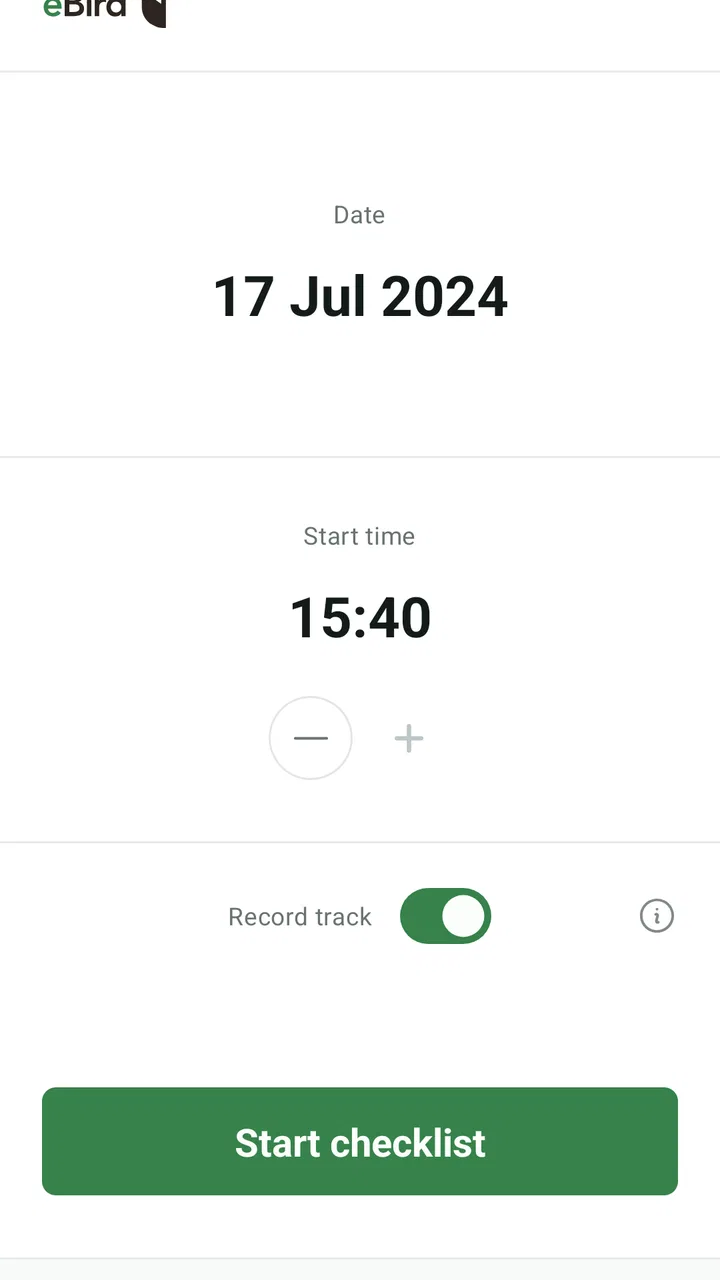
I like that the first step is simply deciding what kind of outing I want to remember: a short stop in one spot or a walk with several distinct stops. That choice can make the finished checklist easier to interpret later, especially when the same birds may follow along the route. In the next section, I turn to what changes when sightings arrive faster than I can comfortably record them.
Starting with the situation in front of me
My typical starting point is not a perfectly planned birding expedition. It is a short walk with a phone in my pocket, a few familiar species in mind, and the possibility of seeing something unexpected. In that situation, eBird Mobile makes more sense than opening a general notes app because the record is shaped around a birding checklist rather than a paragraph of free text.
Before beginning, I need to be clear about what I am trying to record. A complete outing works best when I keep the list tied to one place and one period of observation. That makes the final record easier to understand than a collection of sightings added days later from memory. If I am moving between a park, a nearby pond, and a residential street, I should think about whether those are really one observation session or separate stops.
This is one of the app's quiet strengths: it encourages a more disciplined habit. Instead of simply typing “three birds near the lake,” I am prompted to think in terms of individual species and counts. That structure is helpful for beginners because it teaches the shape of a useful observation without requiring a separate spreadsheet or a complicated personal system.
The trade-off is that the app does not remove the need for judgment. I still have to decide whether two brief calls came from one bird or several, whether a distant silhouette is identifiable enough to record, and whether I am confident about the species. The app can help me document an observation, but it cannot turn an uncertain guess into a reliable identification.
Recording birds while staying present
Once I start an outing, the practical workflow is straightforward. I record a bird when I have enough information to do so, rather than waiting until the end and trying to reconstruct every sighting. That approach is especially useful when several species appear close together. A quick entry preserves the order and context of the encounter better than relying on memory after a long walk.
I prefer to enter observations during natural pauses: after a flock moves on, while sitting near a pond, or when I reach a quiet section of a trail. Entering every detail while a bird is actively moving can pull my attention away from the experience. A better rhythm is to watch first, make a mental note of the key features, and then record the sighting when there is a moment to spare.
For a beginner, the important habit is not speed. It is consistency. If I see a bird I cannot identify, I should not feel pressured to force it into a species entry simply to keep the list complete. A cautious record is more valuable than an impressive-looking list filled with guesses. This is also where a separate field guide, binoculars, or a knowledgeable companion may still be better than relying on a single phone screen.
The app is particularly convenient for ordinary situations that people often overlook. A few minutes watching birds from a balcony, a lunch break beside a green space, or a family walk can become a properly organized observation instead of a forgotten anecdote. That makes it approachable for people who are interested in birds but do not want to commit to carrying a dedicated notebook.
Handling counts instead of vague impressions
One useful change in mindset is learning to count carefully. “Many birds” may be enough for a private note, but a species list becomes much more informative when I distinguish one bird from a small group. I try to count slowly, watch for movement between perches, and avoid adding the same individual twice when it follows me along a path.
This is where the app's structured approach can expose mistakes in my own observation process. If I enter a count immediately, I have to make a decision while the scene is still visible. That is slightly more work than writing a loose note, but it prevents the common problem of remembering only the most noticeable bird and forgetting the rest.
There is also a practical reason to avoid over-editing in the field. If I keep reopening the list to perfect every number, I lose time watching. I prefer to make a reasonable entry, continue observing, and review the list before finishing. That division between field capture and later checking keeps the phone from becoming the main event.
Moving from the field to the saved list
The handoff from observation to saved eBird record is the point where the app becomes more than a digital checklist. My raw experience in the field is messy: changing light, partial views, moving groups, and occasional uncertainty. The saved list gives that experience a stable form that I can revisit instead of leaving it buried in a camera roll or a notes folder.
I recommend reviewing the list before considering the outing finished. This is the moment to catch duplicate entries, suspicious counts, or a species added too quickly. It is also when I can ask whether the list accurately represents the place and time I intended to document. A short review is easier than correcting a vague memory later.
That review step is an important, non-obvious part of the workflow. The app makes recording easy, but ease can encourage rushed entries. The best results come from treating the first pass as field capture and the final pass as quality control. That small pause improves the usefulness of the record without making the outing feel like administrative work.
What happens after the observation leaves the phone
The outcome is not only a personal list. By adding observations to eBird, I am placing them into a broader birding record rather than keeping them isolated on my device. That gives the act of recording a longer life: a sighting can become part of an ongoing history of what was seen in a location and when.
This is the main reason I would choose eBird Mobile over a normal notes app for serious birding. Notes are flexible, and they may be better for writing a detailed narrative about the outing. A camera app is better for preserving images. A traditional field guide is better for studying identification details. But eBird Mobile is more purposeful when the desired result is a structured observation list that can be added to eBird.
The handoff also changes how I think about a walk. I am not merely collecting personal memories; I am creating a record that can be compared with future visits. Returning to the same place becomes more rewarding because I can observe changes in the species I encounter rather than starting from zero each time.
Where the workflow becomes inconvenient
The first friction point is identification uncertainty. The app is not a substitute for learning field marks, listening carefully to calls, or checking a dependable bird guide. If I am new to birding, I may spend more time deciding what to enter than I expected. That is not necessarily a flaw, but it means the app works best alongside basic identification knowledge.
The second issue is attention. A phone is useful for recording, yet it can interrupt the very observation I am trying to preserve. In fast-moving situations, I may miss a bird while typing. I have found that short entries during pauses work better than attempting to document everything instantly. People who want a completely screen-free outing may prefer a paper notebook and transfer the information later.
There is also a difference between a structured list and a rich field journal. If I want to describe weather, behavior, plumage details, habitat, or a memorable sequence of events in my own words, a notes app may offer more freedom. eBird Mobile is strongest when the record is organized around species observations, not when the goal is a long-form diary.
Another limitation is that accuracy still depends on the person holding the phone. A clean interface can make an uncertain observation look official if I submit it without thinking. My rule is simple: record what I genuinely observed, separate confidence from excitement, and avoid treating every distant shape as a definite species. The app supports responsible recording, but responsible recording remains my job.
Who should use it and who should choose something else
I would recommend this app to a beginner who wants a practical way to build a birding habit, especially if the goal is to remember species seen on local walks. It is also a good fit for experienced birders who want a faster alternative to carrying a paper checklist and later typing everything into a digital system.
Families may find it useful because it gives children a concrete role during a walk: watching for a species, helping count individuals, and checking the list before leaving. The all-ages rating fits that kind of shared use. The experience is more rewarding when an adult helps explain why a doubtful identification should remain doubtful rather than turning the outing into a race for a longer list.
I would look elsewhere, or use another tool alongside it, if my priority is detailed species identification lessons, offline reading, advanced photography, or free-form nature journaling. A dedicated field guide can provide deeper identification material, while a notebook can be faster when I do not want to handle a phone. The choice depends on the outcome I want: a structured eBird observation, a study reference, or a personal story.
Device expectations and everyday practicality
The current version is 3.3.5, and it supports devices running Android 8.0 or later. That makes checking compatibility worthwhile before planning to use an older phone on a long outing. I would also test my preferred workflow at home first, particularly if I am unfamiliar with digital checklists or intend to use the app during a group trip.
Because the app is free, the barrier to trying it is low. The more meaningful cost is attention: learning how to make accurate entries, reviewing the list, and developing a habit of recording observations consistently. For occasional curiosity, that may feel like more structure than necessary. For someone who wants a growing history of bird sightings, the effort pays off quickly.
My final view after following the whole process
eBird Mobile succeeds because it connects several small actions that are easy to neglect: noticing a bird, recording it, checking the entry, and turning the outing into a lasting eBird record. None of those steps is complicated on its own, but together they create a much better result than trying to remember everything later.
I especially like it when I use it as a quiet companion rather than a constant screen task. Watch first, record during a pause, review before finishing, and be honest about uncertainty. That workflow preserves the pleasure of birding while giving the observation enough structure to remain useful.
It is not the ideal single tool for every nature enthusiast. It will not replace a field guide, careful identification practice, or a notebook for rich personal notes. Still, for anyone who wants to turn everyday bird sightings into organized records without paying for the app, I think it is a sensible choice. The strongest reason to install it is not simply remembering what you saw, but making each outing count as a reliable part of your birding journey.
FAQs for eBird by Cornell Lab
01What is eBird by Cornell Lab and how does it work?
eBird by Cornell Lab is a comprehensive app designed for birdwatchers to record and share their bird sightings. It works by allowing users to log data about bird species they encounter, including location and time. The app then compiles this information to help researchers and bird enthusiasts track bird populations and migration patterns globally.
02Is eBird by Cornell Lab free to use, and are there any in-app purchases?
Yes, eBird by Cornell Lab is free to download and use on both Android and iOS platforms. The app does not require any in-app purchases for its core functionalities, making it an accessible tool for birdwatchers of all levels. Users can enjoy its rich features without any additional costs.
03What features does eBird offer to enhance my birdwatching experience?
eBird offers a variety of features to enhance your birdwatching experience, including a comprehensive database of bird species, the ability to log sightings, and access to real-time birding hotspots. Users can also explore interactive maps and receive notifications about rare birds in their area, making it a powerful tool for both casual and serious birdwatchers.
04How accurate is the data provided by eBird, and who can access it?
The data provided by eBird is highly accurate, as it is contributed by a global network of birdwatchers and verified by experts. This collective effort ensures reliable information on bird distributions and trends. The data is accessible to the public, researchers, and conservationists, helping to inform environmental policies and conservation efforts worldwide.
05Can I use eBird offline, and how can I log sightings without an internet connection?
Yes, eBird offers offline functionality, allowing users to log sightings even without an internet connection. You can download checklists for specific areas in advance, and any data recorded offline will automatically sync with the app's database once you reconnect to the internet. This feature is particularly useful for birdwatching in remote locations.
Pros
- Comprehensive bird database
- User-friendly interface
- Offline bird identification
- Regular updates
- Supports citizen science
Cons
- Requires internet for full features
- Limited offline maps
- In-app purchases for extra tools
- Battery-intensive during use
- Initial setup can be complex

eBird by Cornell Lab
Gallery